
Quick Answer
To hang a picture, find the wall type first, since this decides which fixing you need. Use a picture hook and nail for lightweight frames on plasterboard, a self-drilling plasterboard fixing for heavier frames without a stud, or a wall plug and screw for brick and concrete. Measure the hanging point on the back of the frame, mark the wall at the correct height using a spirit level, and always check for pipes or cables before drilling.
Step 1: Work Out What Your Wall Is Made Of
Tap the wall gently. A hollow, drum-like sound usually means plasterboard, often called drywall. A solid, dull thud means brick, block, or concrete behind a layer of plaster. Most modern internal walls in the UK are plasterboard fixed to timber studs, while external and older internal walls are more often solid masonry. Knowing this before you buy any fixings saves a wasted trip to the hardware shop.
Step 2: Choose the Right Fixing
| Wall Type | Picture Weight | Recommended Fixing |
|---|---|---|
| Plasterboard, with a timber stud available | Any weight | Screw directly into the stud |
| Plasterboard, no stud nearby | Light, under 2kg | Standard picture hook and pin |
| Plasterboard, no stud nearby | Medium to heavy, 2 to 15kg | Self-drilling plasterboard fixing or spring toggle |
| Brick, block, or concrete | Any weight | Wall plug and screw, drilled with a masonry bit |
If you are unsure whether a wall has a stud behind it, a stud detector is a cheap and reliable way to check before you commit to a drilling position.
Step 3: Measure the Hanging Point on the Frame
Turn the picture face down and look at how it hangs, whether that is a single wire, a D-ring on each side, or a sawtooth bracket. For a wire, pull it taut with your finger and measure the distance from the top edge of the frame down to the taut wire. This measurement is what you will transfer to the wall, not the height of the frame itself, since the wire sits lower than the top edge once hung.
Step 4: Decide the Height and Mark the Wall
A common guideline is to centre the middle of the picture at roughly 145 to 150cm from the floor, which is close to average eye level. Measure up from the floor to find that centre point, then use your frame measurement from Step 3 to work out exactly where the fixing needs to go above it. Use a spirit level or a laser level to mark this point accurately, especially if you are hanging more than one picture in a row.
Step 5: Check Before You Drill
Before drilling into any wall, use a cable and pipe detector to check the marked spot, particularly near light switches, sockets, or in kitchens and bathrooms where pipework is common. This single step prevents the most costly mistakes in picture hanging, since striking a cable or pipe can be dangerous and expensive to repair.
Step 6: Fit the Fixing and Hang the Picture
- For a picture hook, hammer the pin through the hook at a slight downward angle so the hook faces away from the wall
- For a plasterboard fixing, drill a pilot hole to the size stated on the packaging, then insert the fixing until it sits flush
- For brick or concrete, drill with a masonry bit slightly narrower than the wall plug, tap the plug in flush, then drive the screw in leaving a small gap to hook the wire or bracket over
- Hang the picture and step back to check it is level before considering the job finished
Hanging a Picture Above Furniture
Above a sofa, leave 6 to 10 inches of space between the top of the furniture and the bottom of the frame, and choose a piece roughly two thirds the width of the sofa for a balanced look. Above a fireplace mantel, 6 to 12 inches of clearance protects the artwork from heat while leaving room for mantel decor. In both cases, if you regularly sit while viewing the picture, measure eye level from a seated position rather than standing, since this changes the ideal height noticeably.
Hanging Multiple Pictures Together
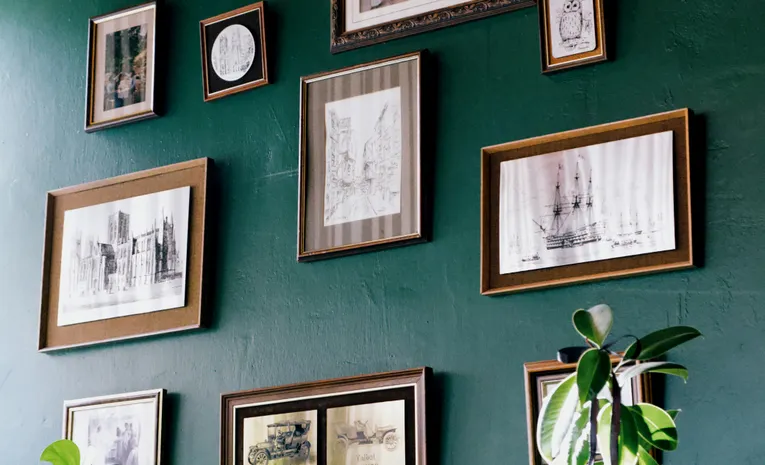
For a gallery wall, keep roughly 2 inches of space between each frame regardless of the overall arrangement, and treat the whole grouping as one piece, centring the entire display at the standard eye-level height rather than centring each individual frame.
For a gallery wall, lay the pictures out on the floor first in your preferred arrangement, then measure the gaps between frames, typically 5 to 8cm, before transferring the layout to the wall. Cutting the frame outline out of paper or cardboard and taping it to the wall first lets you check the arrangement and fixing points without committing to a hole in the wrong place.
Common Mistakes to Avoid
- Measuring the top of the frame instead of the actual hanging point on the wire
- Using a light-duty picture hook for a heavy mirror or framed print
- Skipping the cable and pipe check to save time
- Guessing the height instead of measuring from the floor
- Drilling into plasterboard without checking for a stud when hanging anything heavier than a couple of kilograms
Related Reading
Sorting out other small jobs around the house at the same time? See our guide on how to iron a shirt.
Frequently Asked Questions
What is the best height to hang a picture?
Centring the picture at around 145 to 150cm from the floor to the middle of the frame works well for most rooms and matches average eye level.
Can I hang a heavy picture without finding a stud?
Yes, using a spring toggle or a rated plasterboard fixing designed for heavier loads, though a stud fixing is generally the strongest option where one is available.
Do I need a stud detector?
It is not essential but makes finding a solid fixing point much faster and more reliable than tapping the wall alone.
How do I hang a picture without making holes?
Adhesive picture strips rated for the frame’s weight can work for lightweight pictures on smooth painted walls, though they are less secure than a proper fixing for anything heavier.
Why is my picture hanging crooked?
This is usually because the wire has shifted on one side of the hook, or because the picture was hung without checking it with a spirit level once in place.