
Quick Answer
Dust venetian and vertical blinds regularly with the sock method, an old clean sock turned inside out and wiped along each slat, or a vacuum brush attachment. Aluminium and PVC slats tolerate a damp cloth with mild soapy water, while wooden slats should only ever be dusted dry or barely damp to avoid warping. Roller blinds in vinyl or wipe-clean fabric handle a damp cloth well, but check manufacturer guidance before using any liquid on fabric versions.
The Sock Method Explained
Turn an old cotton sock inside out and slip it over your hand, adding a rubber glove underneath first if you want extra grip. The fuzzy texture picks up dust effectively as you run your hand along each slat, top and bottom, without needing to remove the blind. This single trick works across venetian, vertical, and most aluminium or PVC blinds, and is quick enough to repeat weekly.
Venetian Blinds
Close the blinds fully and dust each slat with a dry microfibre cloth, feather duster, or the sock method, then flip the slats the other way and repeat on the reverse side. For aluminium or PVC venetian blinds, once the dry dust is removed, a cloth dampened with warm water and a few drops of mild dish soap lifts any remaining grime. For a deeper clean, venetian blinds can be washed in a bath filled with warm water and detergent, left to soak for a few hours on stubborn staining, then rinsed with cold water and hung over the shower rail to air dry.
Wooden Venetian Blinds Need a Lighter Touch
Wooden slats should only be dusted dry, using a feather duster, microfibre cloth, or the sock method, and never soaked or heavily dampened, since excess moisture causes warping and discolouration over time. For grime that a dry dust will not shift, a barely damp microfibre cloth is the maximum moisture wooden blinds should see. A furniture polish buff afterwards helps restore their finish and makes future dusting easier.
Vertical Blinds
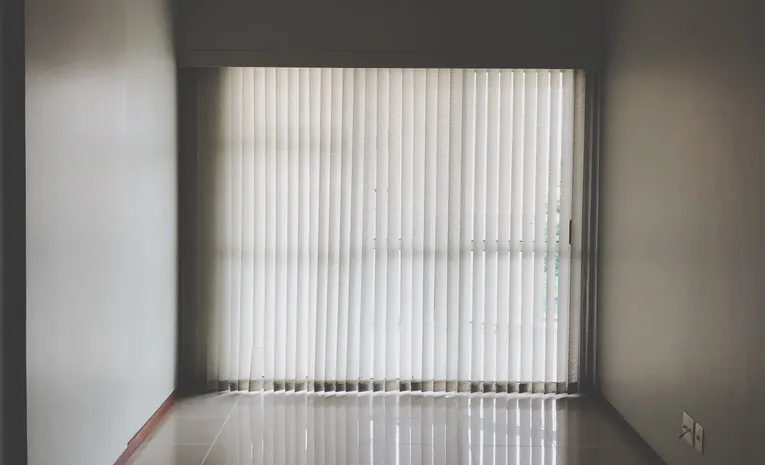
Vertical blinds gather far less dust day to day than horizontal slats, since their orientation does not create a flat, dust-collecting surface. Regular dusting with a microfibre cloth or duster brush keeps them looking fresh, and their wipe-clean material generally handles a damp cloth well for removing marks. For a deeper clean, vertical slats can be unclipped from the headrail and washed individually in a bath or a container of warm water outside, then left to dry fully before rehanging.
Roller Blinds
Roller blinds made from wipe-clean, water-resistant material are among the easiest to maintain, handling a damp cloth or mild cleaner well for both dust and light staining. Always spot test any cleaning product on an inconspicuous area first to check it will not discolour the material. Never roll up a damp roller blind, since even slight trapped moisture can lead to mould, mildew, or fabric deterioration within days.
Removing Mould From Blinds
Wear a face covering before handling mould to avoid inhaling spores, then use a soft brush to remove as much surface mould as possible first. Mix white vinegar, lemon juice, and water in a spray bottle, spray it directly onto the affected area, and scrub gently with a microfibre cloth until the mould lifts. Ensure blinds are completely dry afterwards, and address the underlying humidity or condensation issue in the room to stop mould returning.
Cleaning the Headrail, Cords and Tapes
Pull cords, decorative ladder tapes, and the headrail itself collect significant grime over time but are commonly overlooked during a routine clean. Wipe these down with a slightly damp cloth as part of your deep clean, since neglected cords can become stiff, discoloured, and even affect how smoothly the blind mechanism operates.
Quick Dusting Routine Between Deep Cleans
| Blind Type | Recommended Frequency |
|---|---|
| Venetian (all materials) | Weekly quick dust, monthly deeper clean |
| Vertical | Fortnightly dust, deep clean every few months |
| Roller | Weekly dust, wipe stains as they appear |
Drying Blinds Properly After a Wet Clean
Towel dry each slat individually with a clean cloth to remove excess moisture and prevent water spots, or hang the blind somewhere with good air circulation to dry naturally. Rehanging or rolling up a blind before it is fully dry is one of the most common causes of mould developing shortly after a clean, undoing the work entirely.
Common Mistakes to Avoid
- Soaking wooden slats, which causes warping and discolouration that cannot be reversed
- Folding vertical slats when taking them down, which creases and permanently damages the material
- Using high-pressure or forceful water streams, which can dislodge or damage delicate mechanisms
- Rolling or rehanging any blind while still even slightly damp
Frequently Asked Questions
Can I clean blinds without taking them down?
Yes, the sock method and a vacuum brush attachment both work effectively for regular dusting without removing venetian or vertical blinds.
Can wooden blinds get wet?
Only very slightly damp for stubborn grime; soaking or heavy dampening causes warping and discolouration.
How do I remove mould from blinds?
Brush off loose surface mould first, then spray a vinegar, lemon juice, and water mix onto the area and scrub gently with a microfibre cloth, ensuring the blind dries fully afterwards.
Can roller blinds be rolled up while damp?
No, rolling up a damp roller blind traps moisture and can cause mould or fabric damage within days.
How often should blinds be deep cleaned?
Roughly monthly for venetian blinds, and every few months for vertical blinds, alongside more frequent quick dusting in between.