
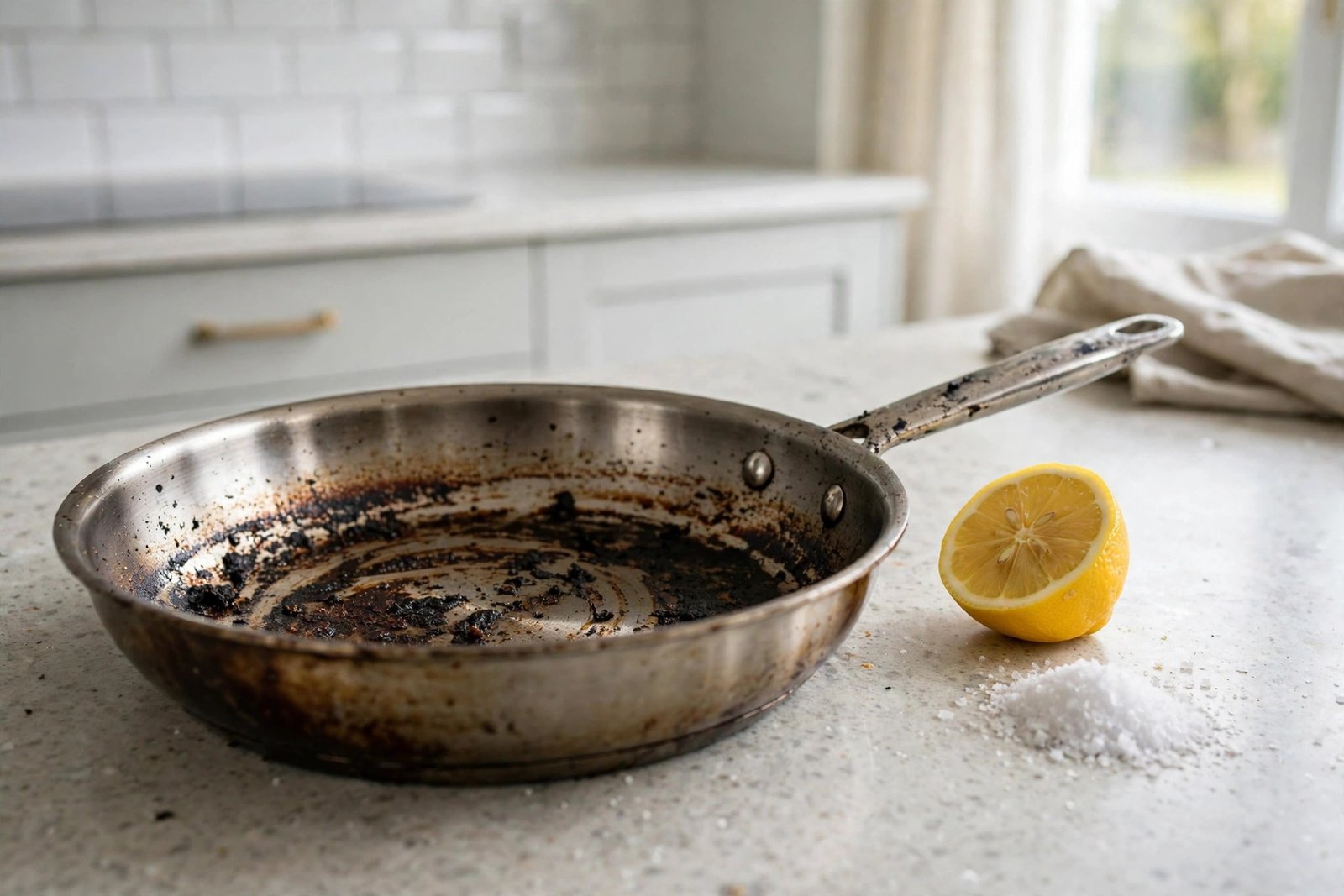
Quick answer: The fastest way to clean a burnt pan without baking soda is the onion method: while the pan is warm, rub the burnt area with a halved onion and a splash of water, and the char lifts in minutes. For a cold pan, simmer water with vinegar or lemon, then scrub with salt. Never use abrasives on non-stick.
The pan is black, the baking soda tin is empty, and the instinct is to reach for the steel wool. Do not. A burnt pan can almost always be saved with things already in the kitchen, and the right method depends on two things: what the pan is made of, and whether it is still warm. Get those two right and the char comes off with far less scrubbing than you expect. Get them wrong and you can scratch a non-stick coating or strip the seasoning off cast iron in one go.
Why Is Baking Soda the Usual Advice, and What Replaces It?
Baking soda is the standard answer because it does two jobs at once. It is mildly alkaline, so it loosens burnt food, and its fine crystals give a gentle scouring action. Without it, you need to replace those two jobs with something else. The methods in this guide do exactly that, in three different ways. Acids such as lemon juice and vinegar soften and dissolve the burnt layer. Steam and hot water swell it and lift it from the metal. And coarse crystals such as salt and Epsom salts scour it off mechanically. Each approach suits some pans and harms others, which is why the comparison matters more than any single trick.
If you do have baking soda after all, our guide to how to clean a burnt pan covers the baking soda boil, the baking soda and vinegar method, a dishwasher tab soak and a few more unusual fixes. This article is for the times when the tin is empty, or when you want a method that suits your pan better.
Which Method Should You Use?
Start with the pan, not the method. A stainless steel pan can take almost anything in this list. A non-stick pan can take almost nothing abrasive. Cast iron needs a method that ends with re-oiling. The table below compares every method in this article, so you can pick in seconds.
| Method | How it works | Time (approx.) | Best pan types | Risk |
|---|---|---|---|---|
| Onion rub | Warm onion releases mild acids and steam; the cut face scrubs gently | 1 to 2 minutes | Stainless steel, enamel | Low; go lightly on non-stick, re-oil cast iron |
| Lemon and salt scrub | Citric acid softens grease; salt crystals scour | 5 to 10 minutes | Stainless steel, enamel | Acid can dull bare aluminium; keep contact short on non-stick |
| Coarse salt scrub | Salt crystals shear off char; brine creeps underneath it | 5 to 10 minutes | Stainless steel, enamel, cast iron | Can scratch non-stick; never leave wet salt on cast iron |
| Epsom salts and washing-up liquid | Crystals scour while the soap lifts grease | 5 to 10 minutes | Stainless steel, enamel | Do not use on non-stick; not for cast iron seasoning |
| Vinegar boil | Boiling vinegar and water loosens burnt food | 10 to 15 minutes | Stainless steel, enamel, non-stick | Low; let the pan cool before scrubbing |
| Cream of tartar paste | Mild acid paste lifts stains with a soft sponge | About 20 minutes | Stainless steel, enamel, non-stick | Low; slower than the other methods |
| Lemon boil | Boiling lemon slices lift grease and residue | 10 to 15 minutes | Stainless steel, enamel | Low; full steps are in our burnt pan guide |
Times are approximate and come from the sources listed at the top of this file. A fresh burn that happened five minutes ago can take under a minute with the onion method. A pan that has sat burnt for a week will take longer, and may need a second pass.
How Do You Clean a Burnt Pan Without Baking Soda?
Work through the methods in order of gentleness for your pan. Start with the mildest method that fits, and only move to a stronger one if the first pass leaves char behind.
Method 1: The Onion Rub (Fastest, Best While the Pan Is Warm)
This is the quickest method here, and it works best on a fresh burn while the pan is still warm. Turn off the heat. Halve an onion, any variety, and add a splash of water or stock to the pan, just enough to make steam. Rub the burnt area with the cut face of the onion in short circles, pushing the loosened residue towards the centre. Wipe it out with kitchen paper, and repeat on any stubborn patches. One source reports most pans soften in 30 to 120 seconds, and a couple of minutes on older, darker patches. The heat releases the onion’s sulphur compounds and mild acids, and the steam swells the burnt layer so it lets go. On bare cast iron, skip the soap at the end, dry the pan thoroughly and rub in a little oil to protect the seasoning. On non-stick, use only a very light touch, and do not use this method if the coating is already damaged.
Method 2: Lemon and Salt Scrub (Best for Grease and Stains)
Cut a lemon in half. Sprinkle a layer of coarse salt over the burnt area, then rub with the cut face of the lemon. The citric acid in the juice breaks down grease and loosens the burnt deposits, while the salt crystals give a gentle scour. Leave the lemon juice on the stain for 5 to 10 minutes, no more on delicate coatings, then wipe in small circles with a soft cloth and rinse with hot water. For a scorched pan, pour in a shallow layer of water mixed with lemon juice, heat it for a few minutes, switch off the hob and let it sit before wiping. This method is very effective on stainless steel and enamel. Keep it away from bare aluminium for long soaks, because acids can dull reactive metals, and keep contact short on non-stick.
Method 3: Coarse Salt Scrub (Best for Heavy Char on Steel and Iron)
Tip away loose char. Add a centimetre of hot water to the cooled pan and bring it just to a simmer for a minute or two to soften the worst of the burn. Pour most of the water away, leaving a warm film, then shake in a generous layer of coarse salt. Fine salt will do, but coarse gives more bite. With the base still warm, push the salt around in tight circles with a folded tea towel, a silicone spatula or a soft cloth. As the crystals break down they form a brine that creeps under the residue, while fresh undissolved edges keep cutting. A second round with a squeeze of lemon can help with stained films. Rinse and wash as normal. This is safe for stainless steel and enamel, and it is the standard way to scrub cast iron, but never leave wet salt sitting on cast iron, and always dry it and re-oil it afterwards. Do not use this method on non-stick.
Method 4: Epsom Salts and Washing-Up Liquid (Best for Scorched Steel)
Epsom salts are magnesium sulfate crystals, first found in Epsom in England. Unlike baking soda they are pH neutral, so they do not break down grease chemically. They work purely as an abrasive, and they are not abrasive enough to harm regular steel or enamel pans. If there is a thick crust, scrape off what you can first. Squirt a few drops of washing-up liquid onto the burnt surface, add a couple of tablespoons of Epsom salts, and scrub in tight circles with a green scouring pad. Wash the pan as normal afterwards. Do not use this method on non-stick surfaces, as the crystals can damage the coating.
Method 5: Vinegar Boil (Safest for Non-Stick)
Fill the burnt pan with equal parts water and white vinegar, only enough to cover the burnt area. Bring it to the boil and keep it boiling for about five to seven minutes, then turn off the heat and let it cool. The vinegar is strong enough to loosen burnt food but gentle enough for a non-stick coating. Do not try to clean the pan while it is still hot, and finish with a soft sponge only. Never use metal scrubbers on non-stick, because they scratch through the coating.
Method 6: Cream of Tartar Paste (Gentle, Good for Light Burns)
Mix cream of tartar with a little water to make a paste, spread it over the burnt area and leave it for about 20 minutes, then wipe off with a soft sponge. It works in a similar way to salt, but more gently, and it is safe for non-stick. It is slower than the other methods here, so save it for light burns and stains rather than thick char.
What Should You Never Use on Each Pan Type?
Most ruined pans are not ruined by the burn. They are ruined by the cleaning. The table below is the short version of the rule: match the tool to the surface, and when in doubt, use the gentler option.
| Pan type | Safe to use | Avoid | Why |
|---|---|---|---|
| Stainless steel | Onion, lemon, salt, Epsom salts, vinegar, cream of tartar | Steel wool on a mirror finish | Steel wool can leave fine scratches and dull the finish |
| Non-stick (PTFE or ceramic) | Vinegar boil, lemon steam, cream of tartar, soft sponge | Salt, Epsom salts, steel wool, metal scrubbers, aluminium foil | Abrasives scratch through the coating and it never recovers |
| Bare cast iron | Coarse salt scrub, onion rub, hot water and a brush | Soaking, washing-up liquid, dishwasher | Soaking and soap strip the seasoning and invite rust |
| Enamel | Onion, lemon, salt, vinegar, Epsom salts | Cold water into a very hot pan, metal scrapers | Thermal shock can craze or chip the enamel |
| Bare aluminium | Hot water, soft sponge, short lemon contact | Long acid soaks, harsh abrasives | Acids dull reactive aluminium and can mark it |
One rule covers every pan type: never pour cold water into a very hot pan. The sudden temperature change can warp thin metal and craze enamel. Let the pan cool first, or add warm water only.
Can You Save a Burnt Non-Stick Pan?
Usually, yes, if the coating itself is intact. A non-stick pan with burnt food on it is not the same as a non-stick pan with a damaged coating. Burnt food sits on top of the coating and can be loosened. A scratched or peeling coating is the pan itself failing, and no cleaning method fixes that.
For a burnt non-stick pan, use the vinegar boil or the lemon steam method, then wipe with a soft sponge. A salt and washing-up liquid soak is sometimes suggested, but keep the salt very gentle and the contact short, because even soft abrasives wear a coating down over time. Cream of tartar paste is another safe option. If the burnt layer will not move after two gentle attempts, try soaking the pan in hot water with washing-up liquid for an hour and then wiping it again. What you should never do is reach for steel wool, a metal scourer or aluminium foil, because the scratches they leave are permanent and food will stick to them from then on.
When Should You Throw a Pan Away?
Most burnt pans are worth saving, but not all of them. Throw the pan away if the non-stick coating is peeling, flaking or bubbling, because flakes can end up in food and the pan will never cook evenly again. Throw it away if the base is warped so badly that it rocks on the hob or no longer sits flat, because it will heat unevenly and can damage a glass hob. A cast iron pan with deep pitting or a crack is also finished. A stainless steel pan with a brown stain that will not shift is not finished: it is only stained, and it will cook perfectly well. Cosmetic marks are not a reason to bin a pan.
There is no reliable test for whether a scratched non-stick pan is safe to keep using. The honest position is that manufacturers and food safety guidance disagree on the details, and the cautious choice is to replace a pan once its coating is visibly damaged.
How Do You Stop Pans Burning in the First Place?
- Cook on a lower heat than you think you need. Most burning happens because the hob is too high for the food, not because the pan is bad.
- Preheat the pan with oil in it, and do not add food to a dry, overheated pan.
- Stir sugary sauces and do not walk away from milk, jam or caramel, because sugar burns fast and sticks hard.
- Deglaze the pan while it is still warm. A splash of water in a warm pan lifts fresh residue before it sets.
- Keep the hob area clean. Grease that builds up around the hob makes smoke and smells worse, and our guide to how to clean cooker hood and extractor fan filters covers the filters that catch most of it.
Frequently Asked Questions
Does lemon or salt work on a burnt pan?
Yes, and they work better together. Lemon juice softens grease and burnt deposits, and coarse salt scours them off. Rub the burnt area with a halved lemon and salt, leave it for 5 to 10 minutes, then wipe and rinse.
Can you save a burnt non-stick pan?
Yes, if the coating is intact. Use a vinegar boil or lemon steam, then a soft sponge. Never use salt, Epsom salts, steel wool or metal scrubbers on non-stick, because they scratch the coating permanently.
Will Epsom salts damage my pan?
Not on stainless steel or enamel, where they work well with washing-up liquid. Do not use them on non-stick, and do not use them on cast iron, because they do nothing for the seasoning.
Is the onion method safe for cast iron?
Yes, with one condition. Rub the burnt area with the onion while the pan is warm, then dry the pan thoroughly and rub in a little oil. Do not use soap on bare cast iron unless you plan to re-season it.
Why did my pan burn even though I used oil?
Usually because the heat was too high or the pan was left dry on the hob. Oil smokes and then burns when it gets past its smoke point, and sugary food sticks and chars fast. Lower heat and a splash of water while the pan is still warm will prevent most of it.
When should I throw a burnt pan away?
When the non-stick coating is peeling or flaking, when the base is warped and no longer sits flat, or when cast iron is cracked or deeply pitted. A brown stain on stainless steel is cosmetic, not a reason to bin the pan.
A burnt pan is a five minute problem, not a reason to buy a new pan. Pick the method that fits what your pan is made of, start gentle, and let heat, acid or salt do the work instead of your arm. And if the baking soda tin is empty again next time, the onion in the cupboard will do the job faster anyway.