
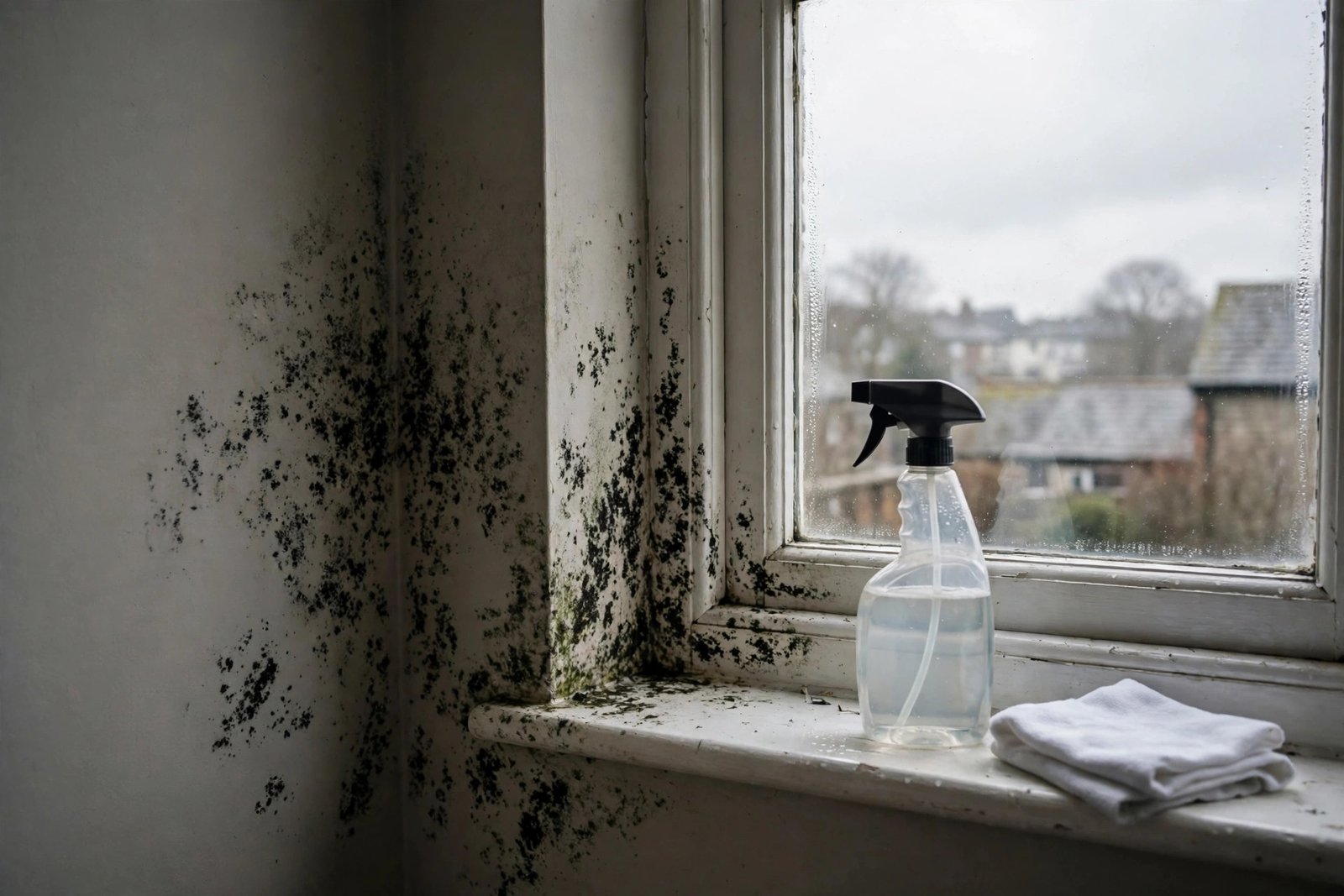
Quick answer: Mould on bedroom walls in winter is almost always caused by condensation: warm, moist air from breathing overnight meets cold external walls and corners, and the damp film lets black mould grow. Clean it with a mould remover, then stop it coming back by ventilating the room, keeping low background heat on, and moving furniture away from outside walls.
Black spots creeping across a bedroom wall in January are a familiar sight in British homes. There is no leak, the room feels dry enough, and the mould still comes back every winter. The reason is simple: your bedroom makes its own moisture all night, and in winter the walls are cold enough to turn that moisture into water. Here is why it happens, and how to fix it.
Why Does Mould Grow on Bedroom Walls in Winter?
Mould needs three things: moisture, something to grow on, and still air. A bedroom in winter supplies all three. Two people sleeping in a closed room release around a litre of water vapour overnight just by breathing. With the windows shut, the door closed and the trickle vents sealed, that moisture has nowhere to go. It settles on the coldest surfaces it can find, and in a British winter those are the outside walls, the corners and the window frames. In winter it gets worse: the heating goes off overnight, so walls cool just as the room fills with moisture from sleeping.
Cold is the other half of the problem. The inside face of an external wall, especially a solid brick wall with no cavity insulation, can sit several degrees below room temperature. The corners where two external walls meet are colder still, and so are window reveals and the wall behind a wardrobe or a bed pushed hard against an outside wall. Warm, moist air hits these cold spots and leaves a film of water behind. That film is condensation, and it is the water mould needs.
What Does the Pattern of Mould Tell You?
Where the mould sits is the best clue to what is causing it.
| Where the mould is | What it usually means | What to check first |
|---|---|---|
| Corners of external walls | Condensation on the coldest spot in the room | Ventilation and overnight heating |
| Behind a wardrobe or bed against an outside wall | Still, damp air trapped behind furniture | Move the furniture out and check the wall behind it |
| Around window frames and reveals | Condensation on cold glass and frames | Trickle vents, and wipe windows dry each morning |
| A tide mark rising from the skirting, or a patch worse after rain | Water getting in, not condensation | Find the leak, or call a damp specialist |
Is Mould on Bedroom Walls Dangerous?
Mould on a bedroom wall is worth taking seriously, because a bedroom is where you spend around a third of your life breathing the same air. NHS guidance links living with damp and mould to respiratory problems, respiratory infections, allergies and asthma. Children, older people and anyone with an existing skin or breathing condition are affected most.
The black mould most people find is usually Cladosporium, a common species that grows on cold, damp surfaces. The species people worry about most, Stachybotrys chartarum, sometimes called toxic black mould, is much less common and grows on material that has stayed wet for a long time, such as soaked plasterboard. Colour is a poor guide to risk, and you cannot tell the species by looking. What matters is how much mould there is, how long it has been there, and who is sleeping in the room.
What is not yet proven is the exact amount of exposure that causes illness in a healthy adult. That uncertainty is a reason to act promptly, not a reason to panic.
How Do You Get Rid of Mould on Bedroom Walls for Good?
Cleaning the mould without fixing the moisture is a waste of time. It will be back within weeks.
Step 1: Work Out the Cause First
Look at where the mould sits and match it to the table above. Mould in corners, behind furniture and around windows almost always means condensation. A tide mark rising from the floor or a patch that is wet to the touch and worse after rain means water is getting in, and no cleaning product will fix that. If you rent, photograph the mould before you clean anything.
Step 2: Clean It Safely
Open the window, wear gloves and a mask, and keep children and pets out of the room. Spray a shop-bought mould remover onto the patch, leave it to work for the time on the label, then wipe it off with a disposable cloth. On hard surfaces such as tiles and sealant, a dilute bleach solution can also work, but never mix bleach with other cleaners, and never use it on bare plaster or fabric. Do not dry brush or vacuum mould off a wall, because that throws spores into the air. Our guide to how to get rid of mould on walls and fabric explains the cleaning steps in more detail.
Step 3: Dry the Wall and the Room
After cleaning, let the wall dry fully with the window open and the heating on low. Wipe condensation off windows every morning, and wring the cloth out in a sink rather than drying it on a radiator. If the wall still feels damp on a dry day, or the mould grows back within two weeks, the moisture source is still there.
Step 4: Fix the Moisture, Not Just the Mould
This is the step most people skip, and it is the one that decides whether the mould returns. Open the trickle vents on bedroom windows and leave them open through winter. Keep the bedroom door ajar overnight if you can. Move wardrobes and beds a few centimetres away from external walls so air can move behind them. Keep low, steady background heat on during cold snaps. And if you use a humidifier, keep it clean, as our guide to how to clean a humidifier explains.
Cleaning Methods Compared
| Method | How it works | Best for | Watch out for |
|---|---|---|---|
| Mould remover spray | Kills mould on the surface and lifts staining | Painted walls, window frames, sealant | Follow the time on the label; ventilate the room |
| Diluted bleach on hard surfaces | Kills mould on non-porous surfaces | Tiles, sealant, uPVC frames | Never mix with other cleaners; not for plaster or fabric |
| Professional mould treatment | Deep clean plus advice on the cause | Large areas, repeat growth, rented homes | Costs more; still needs the moisture fixed |
How Do You Stop Mould Coming Back in Winter?
- Open the trickle vents and leave them open. They give the room slow background ventilation even with the windows closed.
- Air the bedroom for ten minutes each morning. A short burst of cold, dry air removes more moisture than leaving a window open a crack all day.
- Do not dry washing on radiators in the bedroom. A load of washing releases around two litres of water into the room, in the coldest part of the year, with the windows shut.
- Run the bathroom extractor fan for 20 minutes after a shower. Most people switch it off with the light, and the moisture stays in the house.
- Keep furniture away from external walls and low background heat on overnight in cold spells. Both stop the wall behind the furniture staying cold and damp.
Who Has to Fix It: You or Your Landlord?
If you own your home, the fix is yours. If you rent, the law has recently changed in tenants’ favour.
Awaab’s Law came into force on 27 October 2025 for social housing in England. It is named after Awaab Ishak, a two-year-old who died in 2020 after prolonged exposure to mould in his family’s housing association flat. Under the law, social landlords must investigate emergency hazards and make the home safe within 24 hours, and investigate a significant damp or mould hazard within 10 working days, with written findings in 3 working days and safety work done within 5 working days.
| What must happen | Deadline |
|---|---|
| Emergency hazard investigated and made safe | Within 24 hours of the landlord becoming aware |
| Significant damp or mould investigated | Within 10 working days |
| Written summary of findings given to the tenant | Within 3 working days of the investigation ending |
| Safety work for a significant hazard completed | Within 5 working days after the investigation |
These deadlines apply to social housing in England only. They do not yet apply to private rented homes. The Renters’ Rights Act 2025 will extend Awaab’s Law to the private rented sector, but a consultation opened in October 2026 and the start date is not yet fixed. Private tenants still have rights under the Homes (Fitness for Human Habitation) Act 2018, and the council’s environmental health team can act where a home is unfit.
When to Call a Professional
Call a damp specialist if the mould covers a large area, if it keeps coming back within two weeks of cleaning, if the wall stays damp on a dry day, or if someone in the household has asthma and the mould is in their bedroom. Get help sooner if plaster is soft or crumbling, or if you can smell damp but cannot find the mould, because the growth may be inside the wall. If you rent and the landlord will not act, contact the council’s environmental health team, and in social housing you can also complain to the Housing Ombudsman.
Frequently Asked Questions
Why does mould keep coming back on my bedroom wall every winter?
Because the cause is still there. Cleaning removes the visible mould but not the condensation that feeds it. Until the room is ventilated and the wall is kept a little warmer, the mould will return each winter.
Is black mould on a bedroom wall dangerous?
It can be. NHS guidance links damp and mould to respiratory problems, infections, allergies and asthma, and the risk is highest for children, older people and people with breathing conditions.
Should I use bleach to clean mould off a bedroom wall?
Only on hard, non-porous surfaces such as tiles and sealant, and never mixed with other cleaners. For painted walls, a shop-bought mould remover is the safer choice.
My landlord says the mould is my fault for not opening windows. Is that right?
Not necessarily. Cold walls, missing insulation and broken extractor fans are the landlord’s responsibility, and mould in corners or behind furniture usually points to the building. In social housing in England, Awaab’s Law sets fixed deadlines for the landlord to act.
How do I stop condensation on bedroom windows in winter?
Wipe the glass and sills dry each morning, open the trickle vents, air the room for ten minutes, and keep low background heat on overnight. Condensation on windows is a warning sign: the same moisture is settling on the walls too.
Mould on a bedroom wall in winter is almost never a mystery. It is condensation meeting a cold wall in a room that is shut up all night. Clean it properly, air the room, keep a little heat on, and give the furniture some space from the wall. Do those things and most bedroom mould stays away for good.