
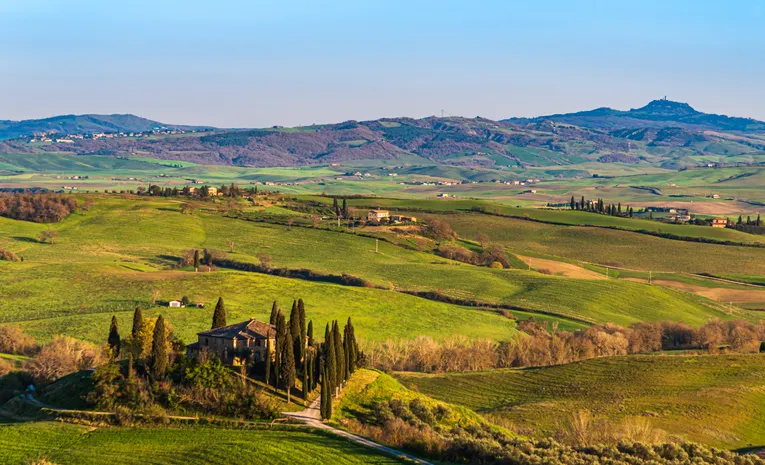
Quick Answer
The best time to visit Tuscany is May to June or September to October, when temperatures sit around 20 to 27°C and crowds are noticeably thinner than peak summer. Split your trip between Florence for art and history, and a countryside base in Chianti or Val d’Orcia, where renting a car genuinely pays off. Avoid driving into Florence’s historic centre, since ZTL camera fines run €80 to €130 per violation.
When to Visit
| Season | What to Expect |
|---|---|
| May to June | Mild temperatures, green rolling hills, moderate crowds |
| July to August | Hot, crowded, most expensive; many locals away on holiday |
| September to October | Grape harvest season, golden landscapes, fewer crowds |
| November to March | Cheapest time to visit, quieter, but many rural attractions have reduced hours |
Where to Base Yourself
For a five to seven day first visit, splitting time between Florence and one countryside base works well for most travellers. Florence needs no car, since its sights are walkable and well connected by train to other Tuscan towns. A countryside base in Chianti or Val d’Orcia is where a rental car genuinely earns its keep, since the hill towns, wineries, and back roads are difficult to reach by public transport.
Getting Around: Car vs Public Transport
Regional trains connect Florence to Siena in around 90 minutes for roughly €10, making the two cities easy to combine without a car. San Gimignano is best reached by car or a bus change at Poggibonsi. For exploring Val d’Orcia and Chianti’s back roads and remote farmhouses, a car becomes genuinely worthwhile from your second countryside day onward.
The Florence ZTL Zone: A Costly Mistake to Avoid
Florence’s historic centre is a restricted traffic zone monitored by cameras, and driving into it without authorisation results in fines of €80 to €130 per violation, billed later through your rental car company. Park in one of the designated lots outside the centre and walk or use public transport instead.
Must-Book Attractions in Advance
- The Uffizi Gallery and Galleria dell’Accademia, home to Michelangelo’s David, both sell out weeks ahead during peak season
- Winery visits in Chianti and Montalcino, particularly during the September harvest period
- Ferry crossings to Elba Island, if included in your itinerary, especially for July and August travel
Exploring Siena
Siena’s historic centre is entirely walkable, and the Palazzo Pubblico’s Museo Civico houses Lorenzetti’s famous Allegory of Good and Bad Government fresco. Combined with Florence via a short train ride, Siena is one of the easiest countryside towns to add to a first-time itinerary.
San Gimignano and Its Famous Wine
San Gimignano is known for its medieval towers and for Vernaccia di San Gimignano, the first Italian wine ever granted DOC status. Climbing the Torre Grossa gives sweeping views over the Elsa valley, and the main square offers a good spot for pici pasta away from the busiest midday tour groups.
Rough Daily Budget
Budget around €30 to €60 per day if visiting a major museum or two, given typical Uffizi and Duomo admission pricing. Almost all restaurants charge a small cover charge, typically €2 to €4 per person, which covers bread and table setting rather than being an unusual add-on.
Local Dining Etiquette
- Cappuccino is considered a morning-only drink; ordering one after lunch marks you as a tourist, so order a caffè, a shot of espresso, instead
- The cover charge on your bill covers bread and table setting, and tipping is not expected the way it is in the US
- Outdoor dining is central to Tuscan food culture, particularly in the warmer months
Driving in Hilltop Towns
Never attempt to drive into the centre of hilltop towns like San Gimignano or Montepulciano. Park in the designated lots outside the medieval walls and walk up, since narrow, ancient streets were never built for cars and many have their own restricted zones.
Practical Planning Tips
- Book major museum tickets and winery visits well ahead of time, particularly for spring and autumn travel
- Confirm current opening hours before travelling, since rural attractions often have reduced or seasonal hours
- Consider travel insurance, particularly if your itinerary includes driving or remote countryside stays
- Avoid August if possible, due to intense heat and many local businesses closing for domestic holidays
Frequently Asked Questions
Do I need a car to visit Tuscany?
Not for Florence and Siena, which are well connected by train, but a car is genuinely useful for exploring Chianti and Val d’Orcia’s countryside and hill towns.
What is the ZTL zone in Florence?
A camera-monitored restricted traffic zone in the historic centre; driving into it without authorisation results in fines of €80 to €130, billed later through your rental company.
When is the cheapest time to visit Tuscany?
Typically November through March, though many rural attractions have reduced hours during this off-season period.
Is September a good time to visit for wine lovers?
Yes, September brings the Vendemmia grape harvest, making it an especially good time for winery visits in Chianti and Montalcino.
How far is Siena from Florence?
Around 51.7km, roughly a 90 minute regional train journey costing about €10.